Edward Robinson
1986
Edward Robinson is a British industrial designer based in London. He studied Three-Dimensional Design at Northumbria University, graduating in 2009, before moving to London where he worked with Max Lamb and later joined Alexander Taylor Studio. There, he contributed to projects spanning industrial design and innovation development for clients including adidas, Hunter, Parley for the Oceans, the V&A Museum, and Established & Sons.
In 2018, he established Edward Robinson Studio, leading projects for international clients including Athletics FTWR and Humanrace. At Athletics FTWR, Robinson was a founding partner, where he defined the company’s design and development strategy, establishing a product language and manufacturing framework grounded in material innovation. In 2019, he became a founding partner of Humanrace, serving as Creative Director and Head of Industrial Design, leading the company’s design from inception through launch. From 2021 to 2024, he was based in Los Angeles, where he developed the foundational product language and visual identity—establishing the material and visual codes that continue to define the company.
Robinson’s practice is defined by clarity—distilling complexity into forms that endure. His work balances precision with human experience, producing objects shaped as much by use and longevity as by craft and technique. Working across both independent and commercial contexts, his approach moves fluidly between concept, production, and scale, maintaining a clear and recognisable authorship. In 2024, he returned to London, re-establishing his studio in a converted factory in the city’s northeast, where this approach continues to underpin a range of projects, including a recent collaboration with USM Haller, presented at Capsule Plaza during Salone del Mobile 2025.
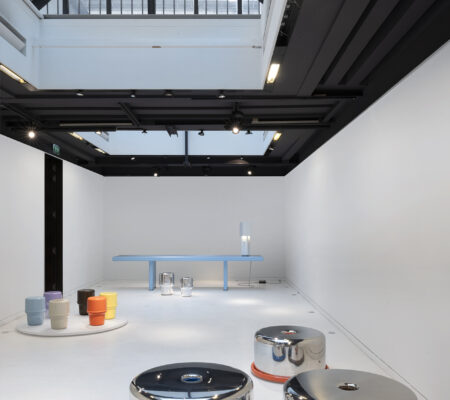
Exhibited in April 2026 at Jousse Entreprise, Paris, Continuity marked Robinson’s inaugural solo exhibition and the gallery’s first presentation dedicated to a contemporary industrial designer. Bringing together three ongoing bodies of work—Board, Dyad, and Cloche—the exhibition positioned his practice between exhibition and everyday use, heritage and continuity. At its centre, Board explored how a fundamental construction element could be scaled, repeated, and re-oriented to define atmosphere within space, combining hand-lacquered wooden panels with machined aluminium. Dyadand Cloche, formed through metal spinning, extended this language through colour, proportion, and variation within a consistent formal system.
Biography (PDF)
Presse (PDF)


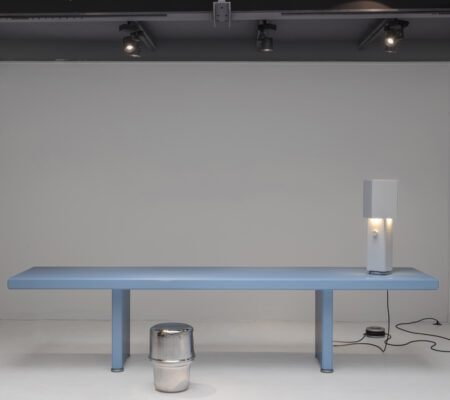 “Board” Table, 2026
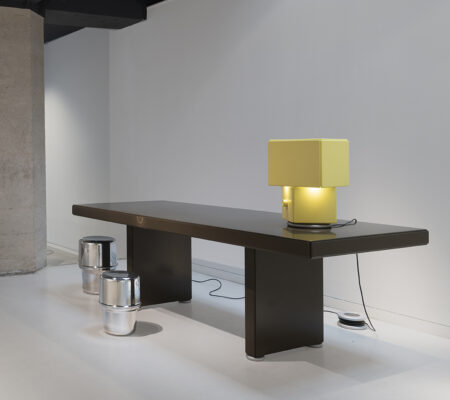 “Board” Table (small), 2026
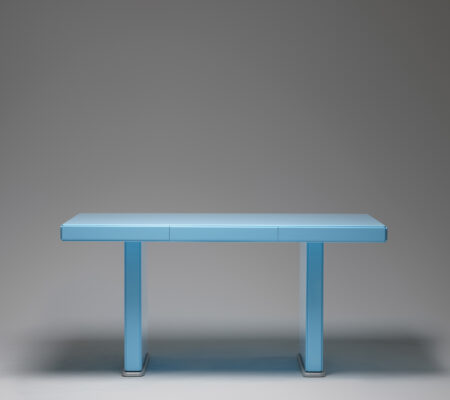 “Board” Desk, 2026
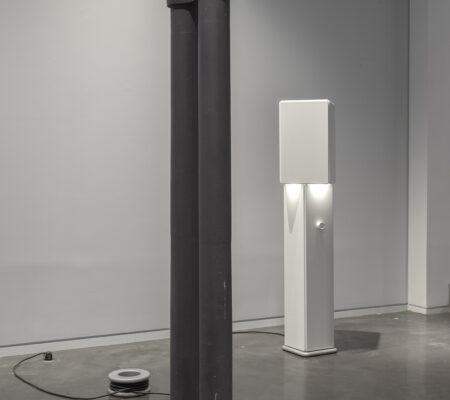 “Board” Floor lamp, 2026
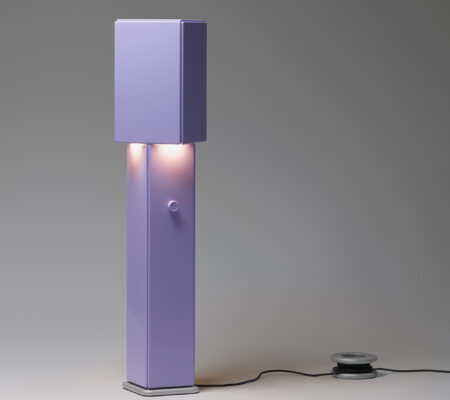 “Board” Floor lamp, 2026
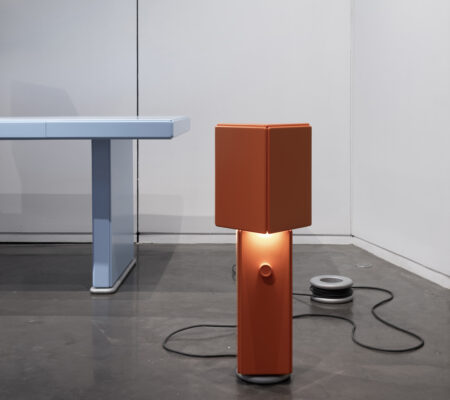 “Board” Desk lamp, 2026
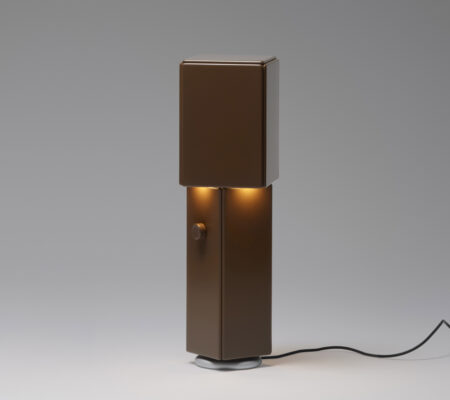 “Board” Desk lamp, 2026
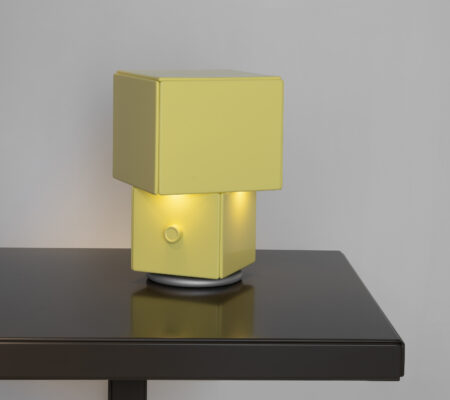 “Board” Side lamp, 2026
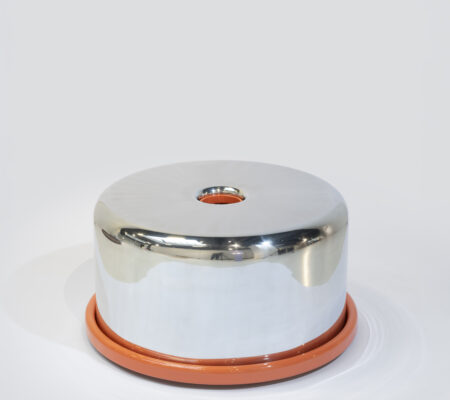 “Cloche” Coffee table, 2026
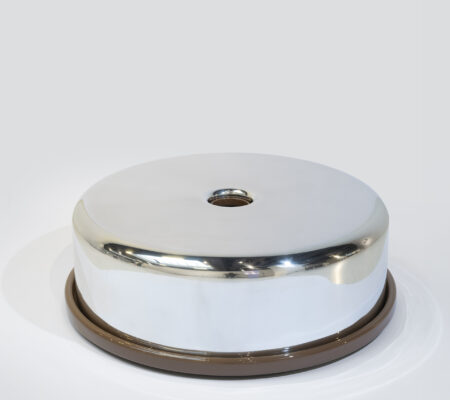 “Cloche” Coffee table, 2026
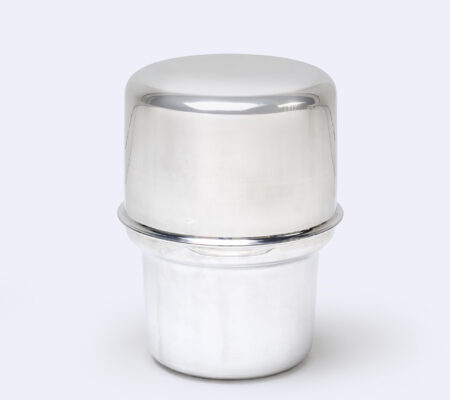 “Dyad” Stool, 2026
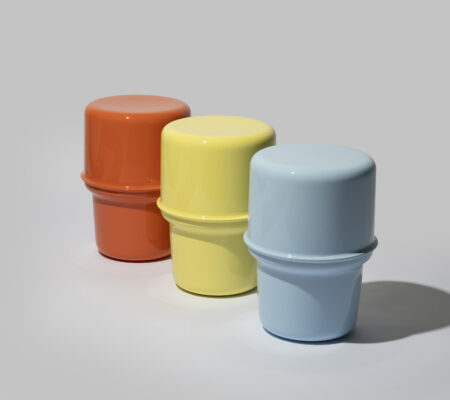 “Dyad” Stool, 2026
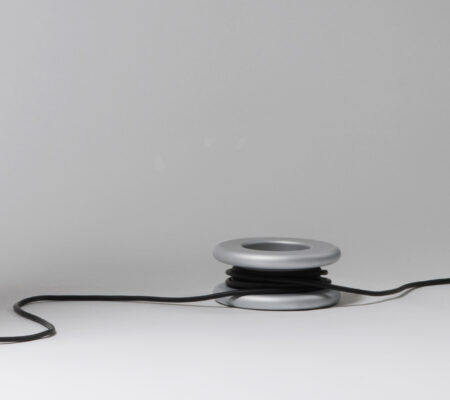 Cable reel, 2026