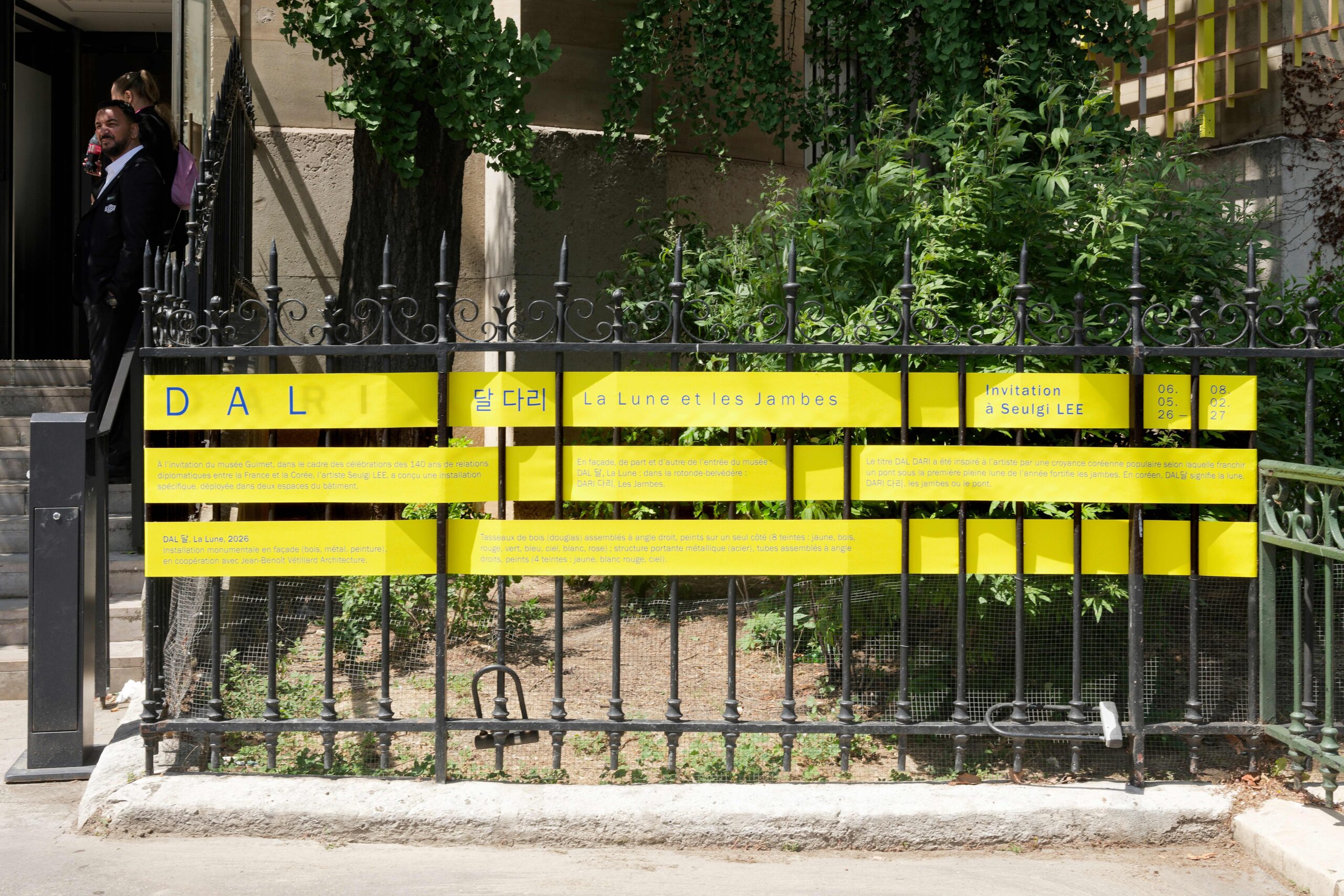
SEULGI LEE | Dal Dari, La Lune et les Jambes | Musée Guimet
Hors les murs 6 June 2026 - 1 February 2027Address : Musée Guimet National Museum of Asian Arts 6, place d’Iéna 75016 Paris
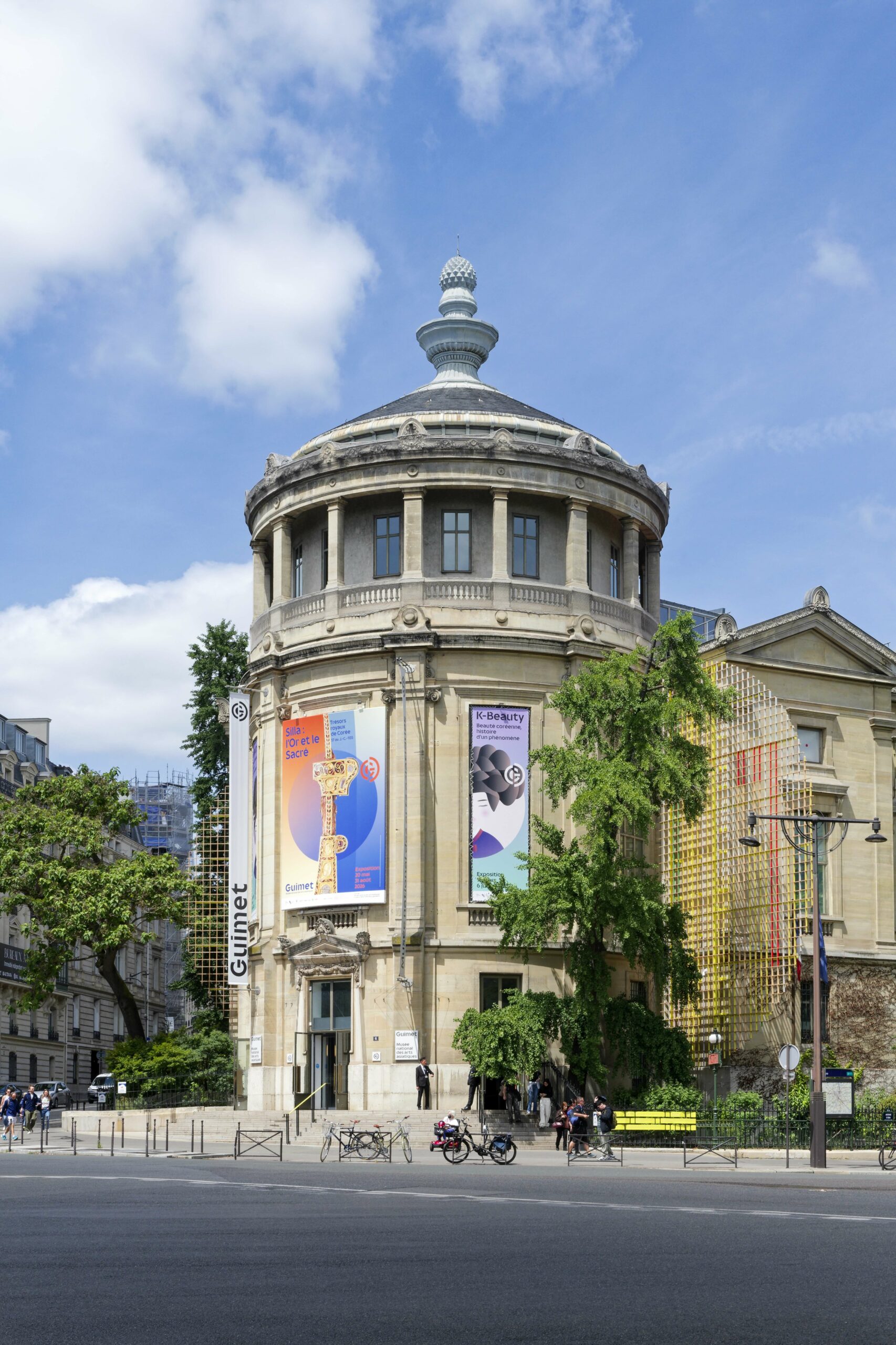
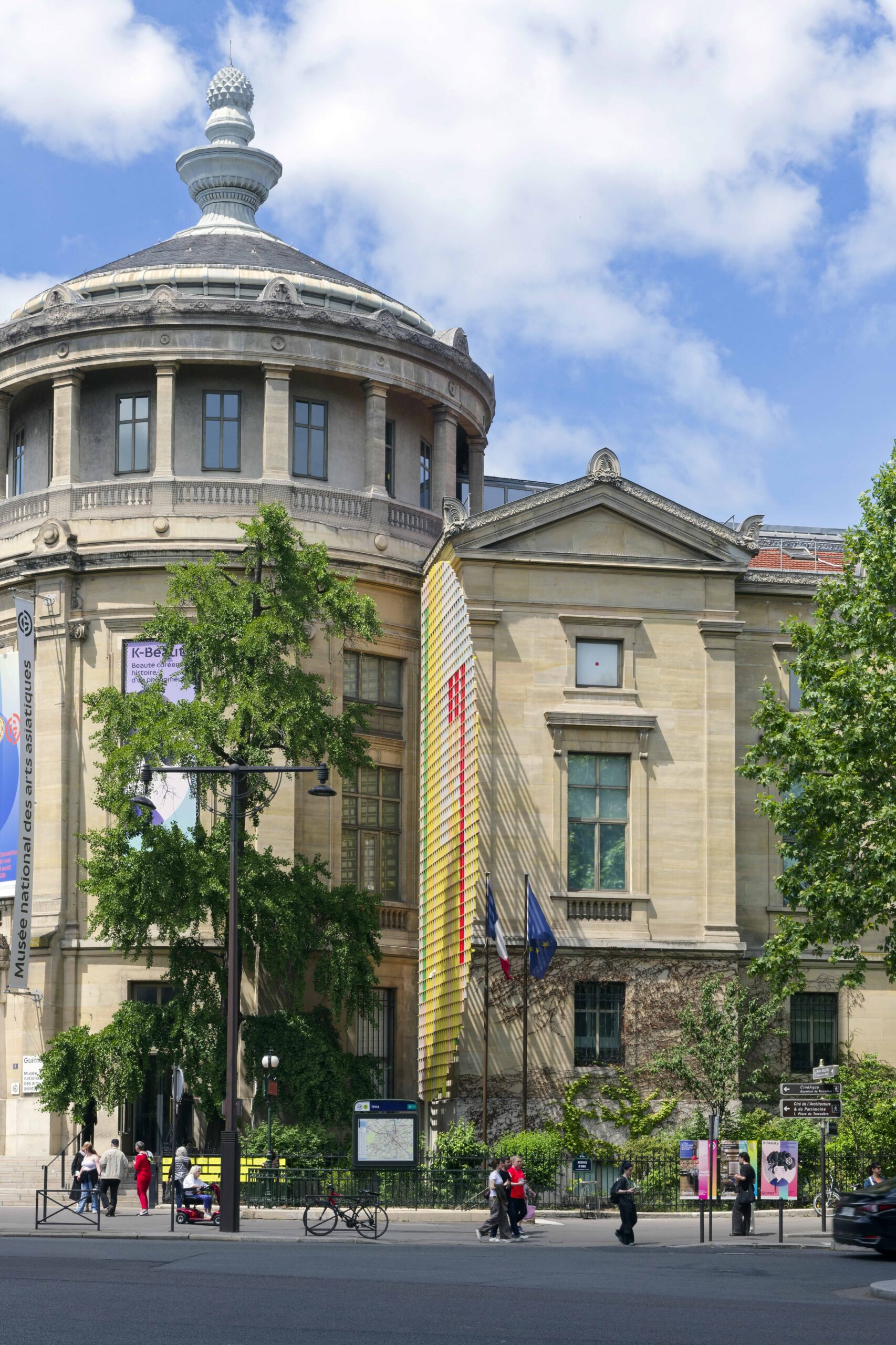
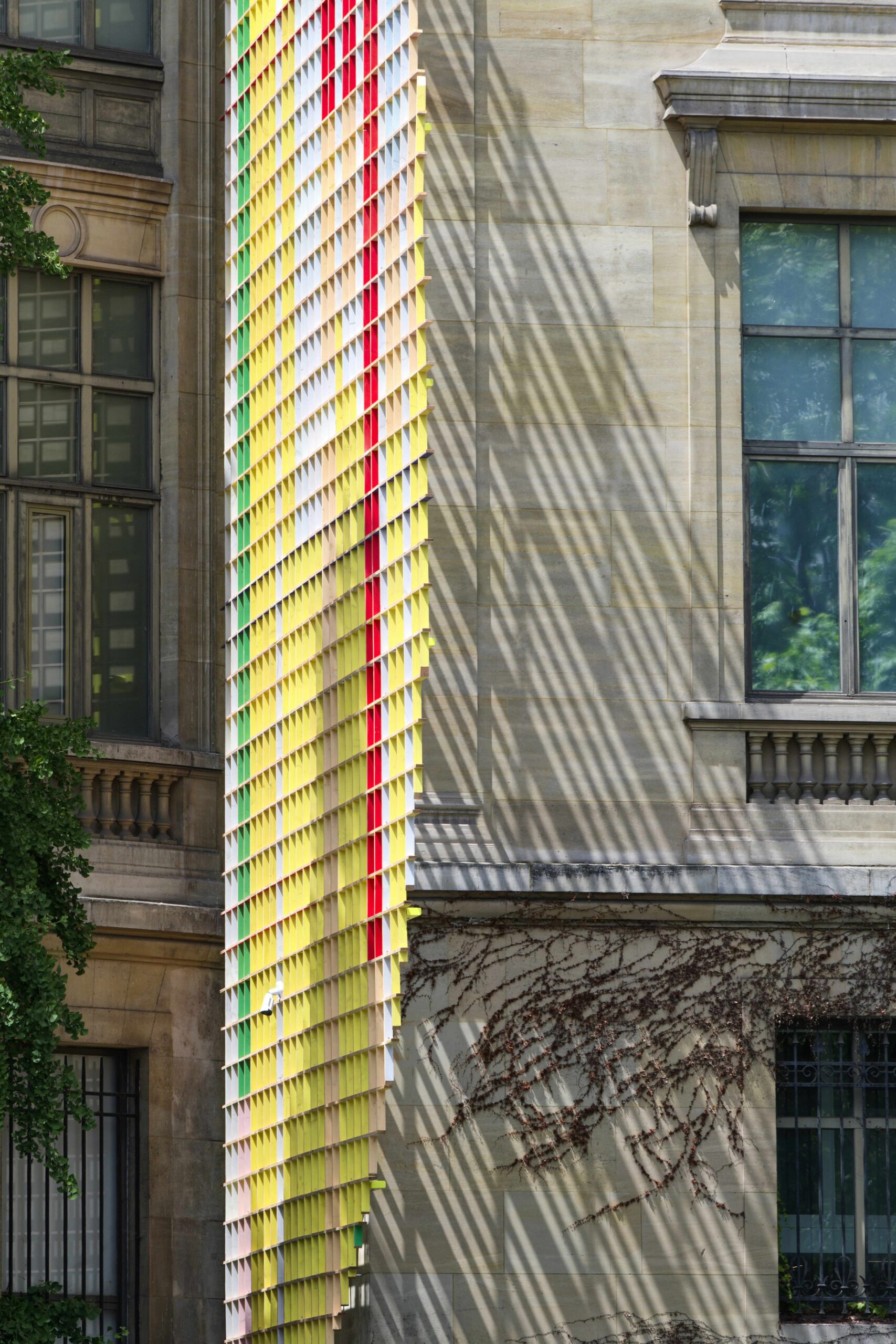
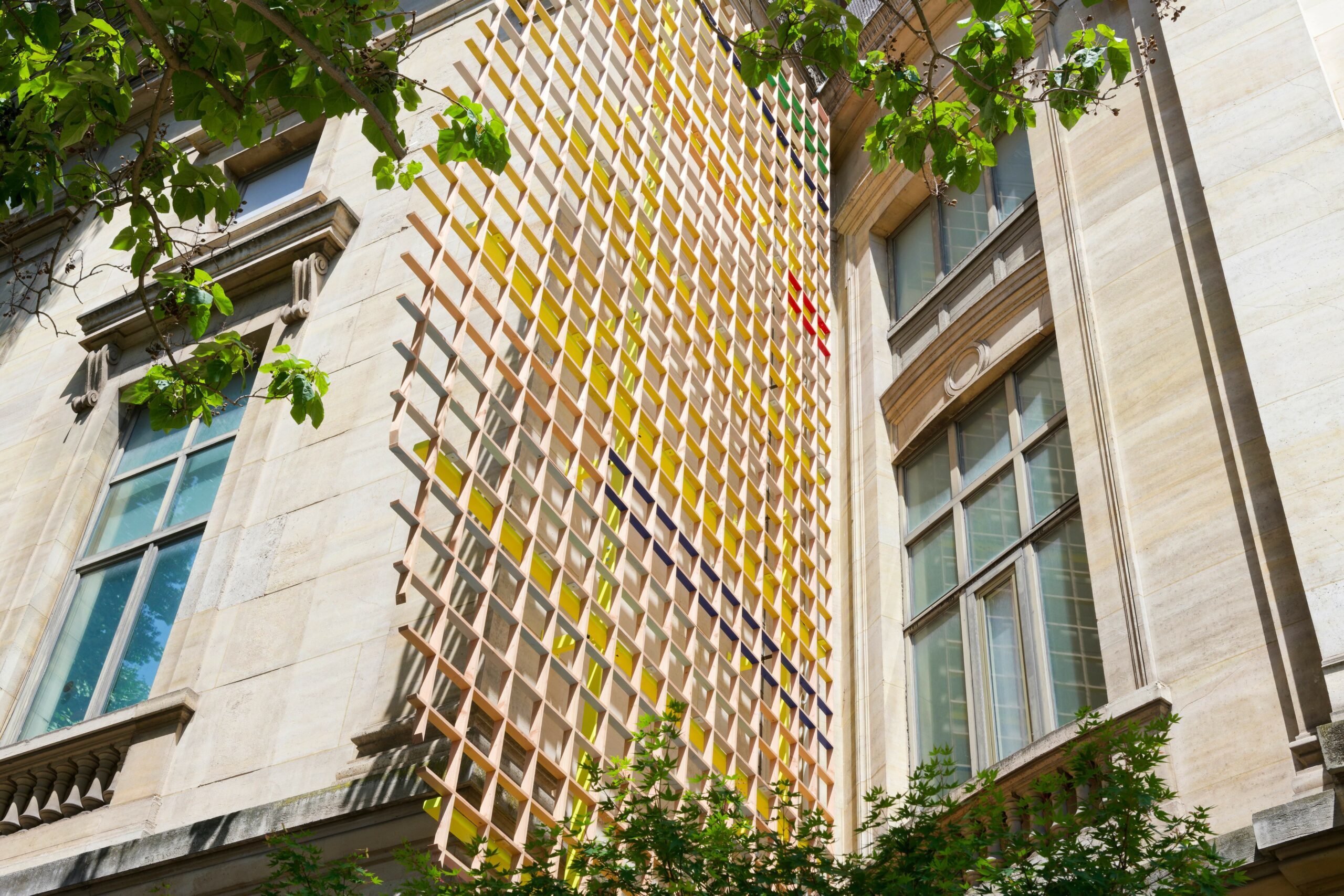
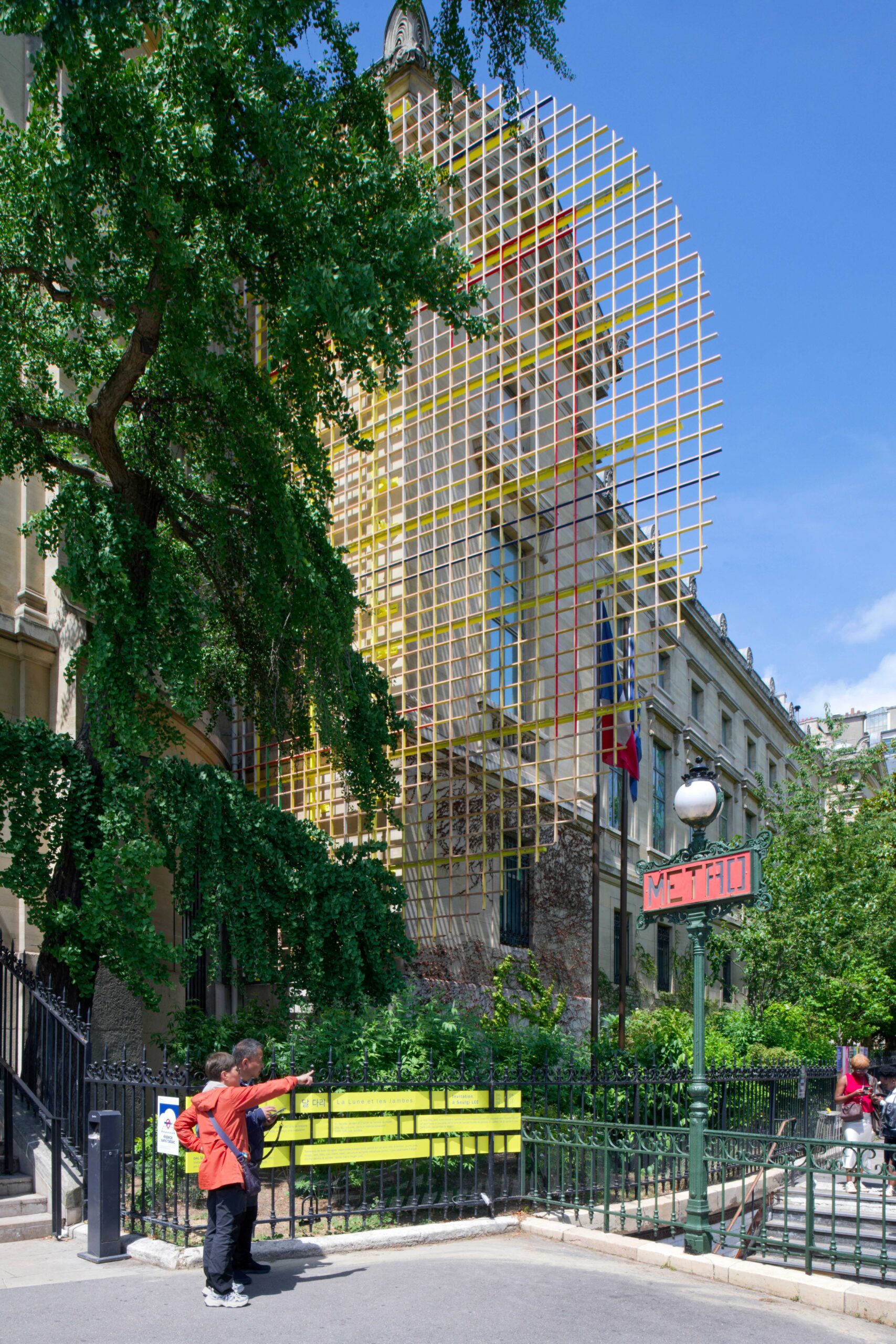
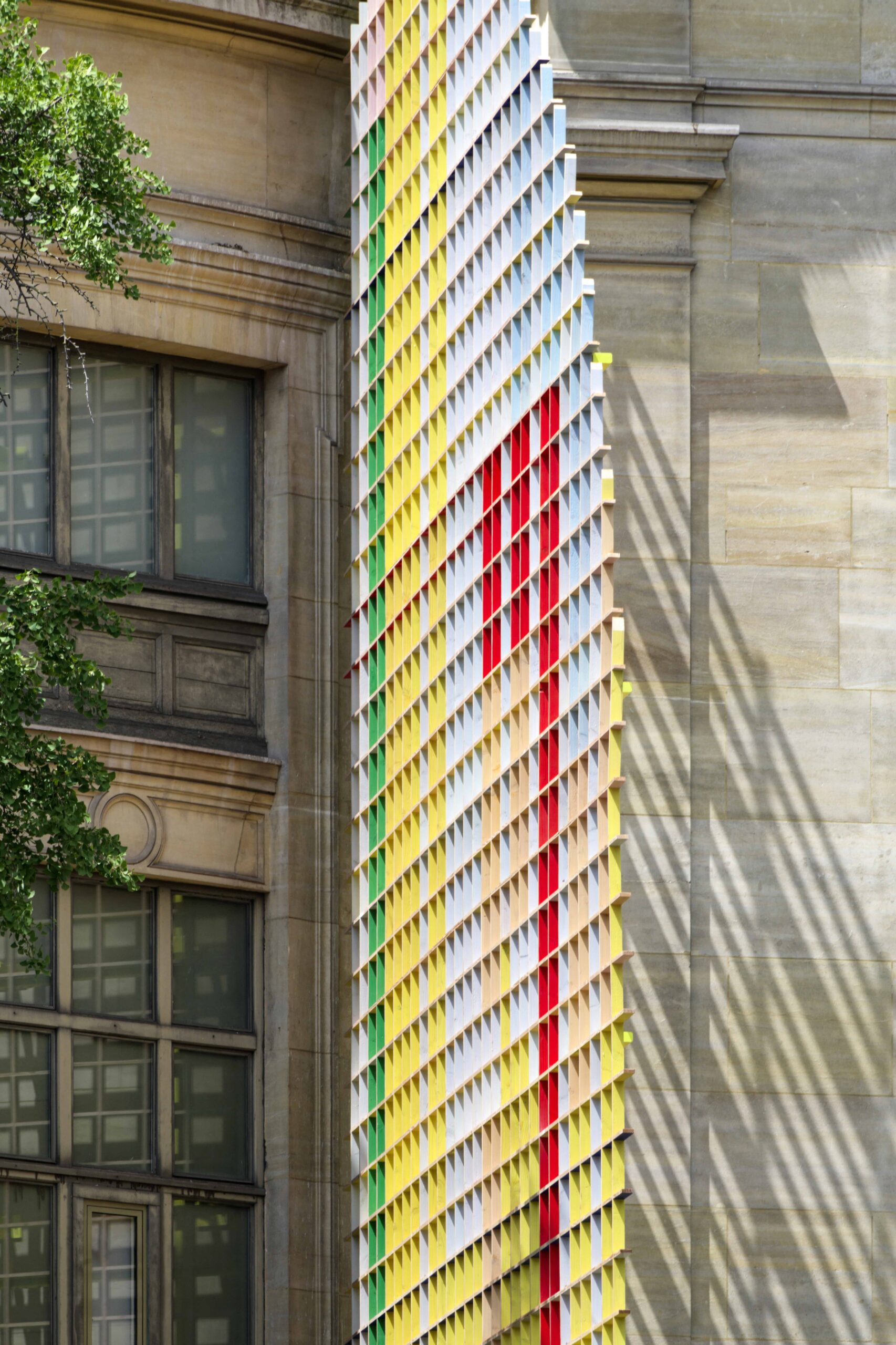
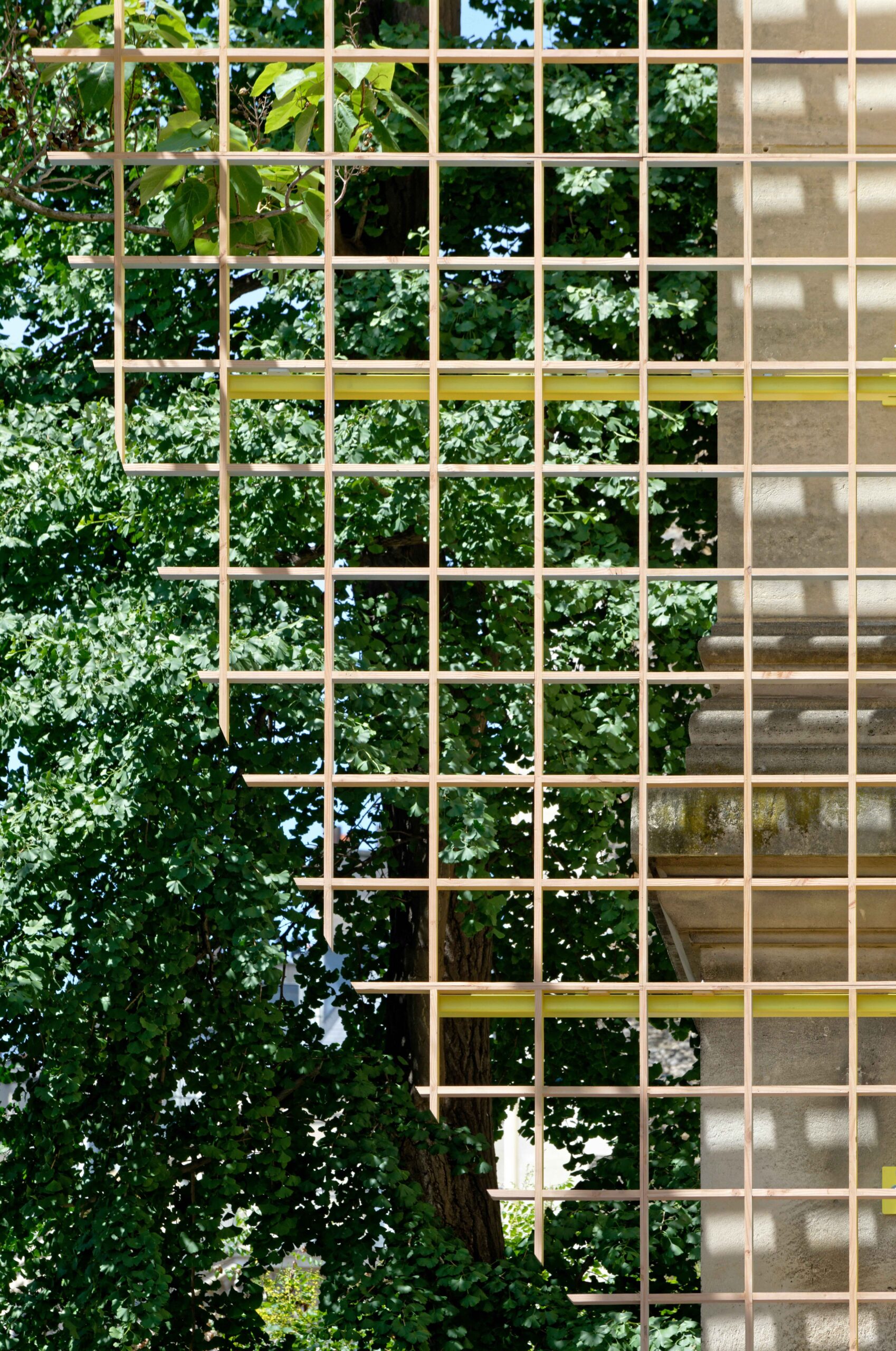
At the invitation of the Guimet Museum, South Korean artist Seulgi Lee conceived a site-specific temporary installation for the building on Place d’Iéna. Entitled “Dal Dari, The Moon and the Legs,” her work comprises two interventions, one located outside and the other inside the building: a monumental sculpture on the façade, created in collaboration with architect Jean-Benoît Vétillard, and a mural in the museum’s fourth-floor rotunda, executed with the participation of Dancheong painters from Korea.
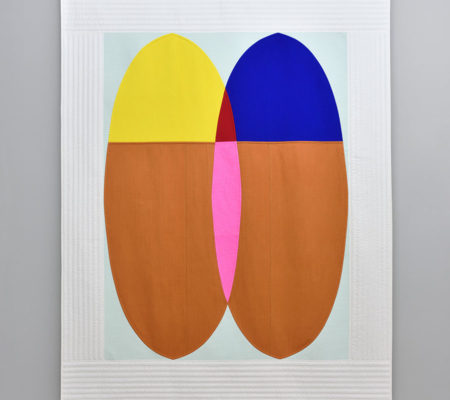
Whether paintings, sculptures, or installations, Seulgi Lee’s works manifest as arrangements of simple forms: elementary geometric surfaces or volumes, and flat areas of color. This simplicity is accompanied by a vibrant and varied chromatic range, where the association or juxtaposition of distant or even opposing colors on the spectrum creates a striking counterpoint.
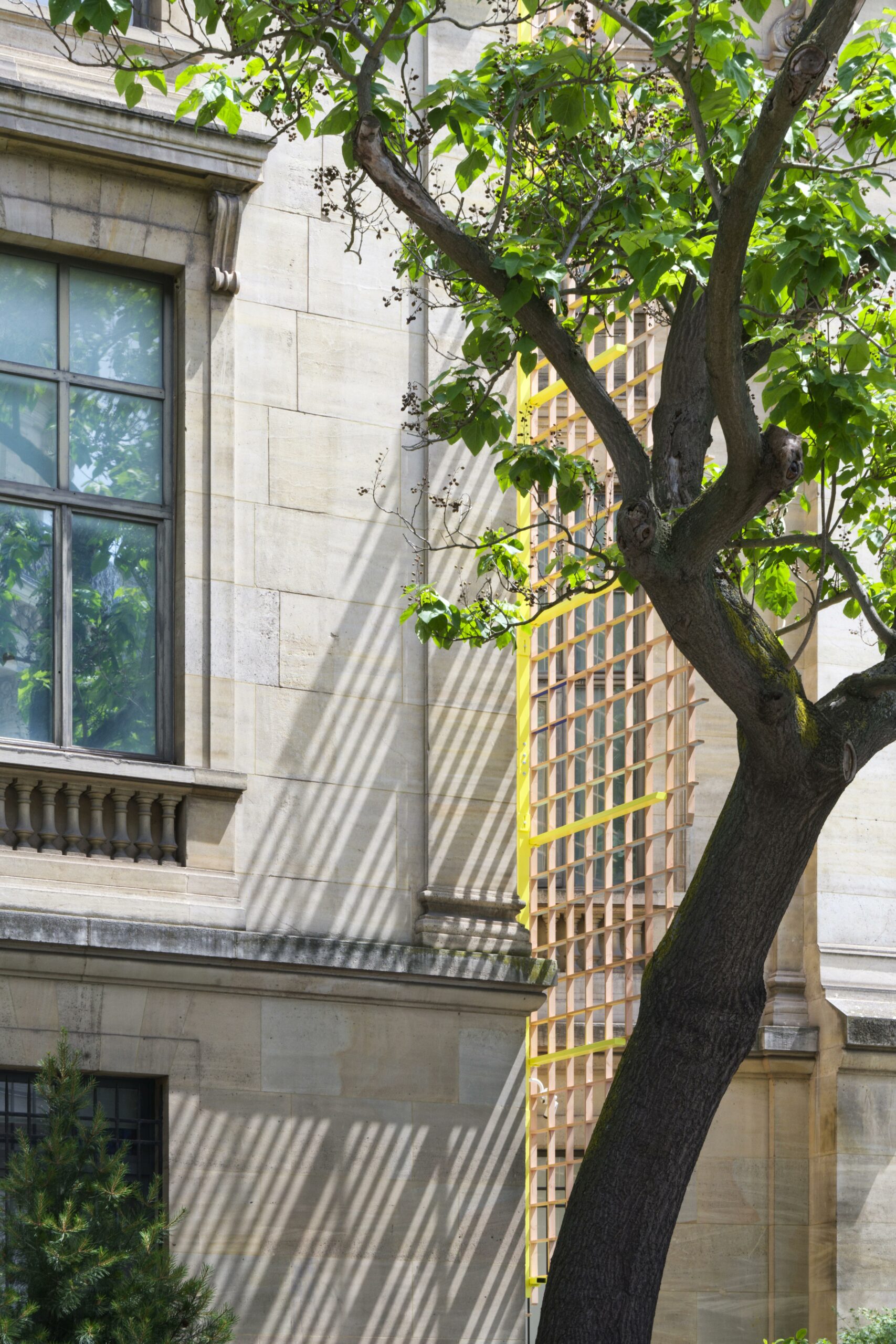
In Seulgi Lee’s design for the Guimet Museum, the façade is adorned with two semicircular forms, installed on either side of the museum entrance, perpendicular to each wing of the building. The structure of these half-moons consists of a lattice of wooden slats assembled at right angles. The motif is reminiscent of the modernist grid and the wooden screens (or moonsal) used as space dividers in traditional Korean architecture. Only one side of the slats is painted and colored, resulting in a dynamic perception that shifts and becomes more fluid as the visitor moves around the space.
The title, “Dal Dari, The Moon and the Legs,” was inspired by a popular Korean belief that crossing a bridge under the first full moon of the year strengthens the legs.
In the 4th Floor Rotunda
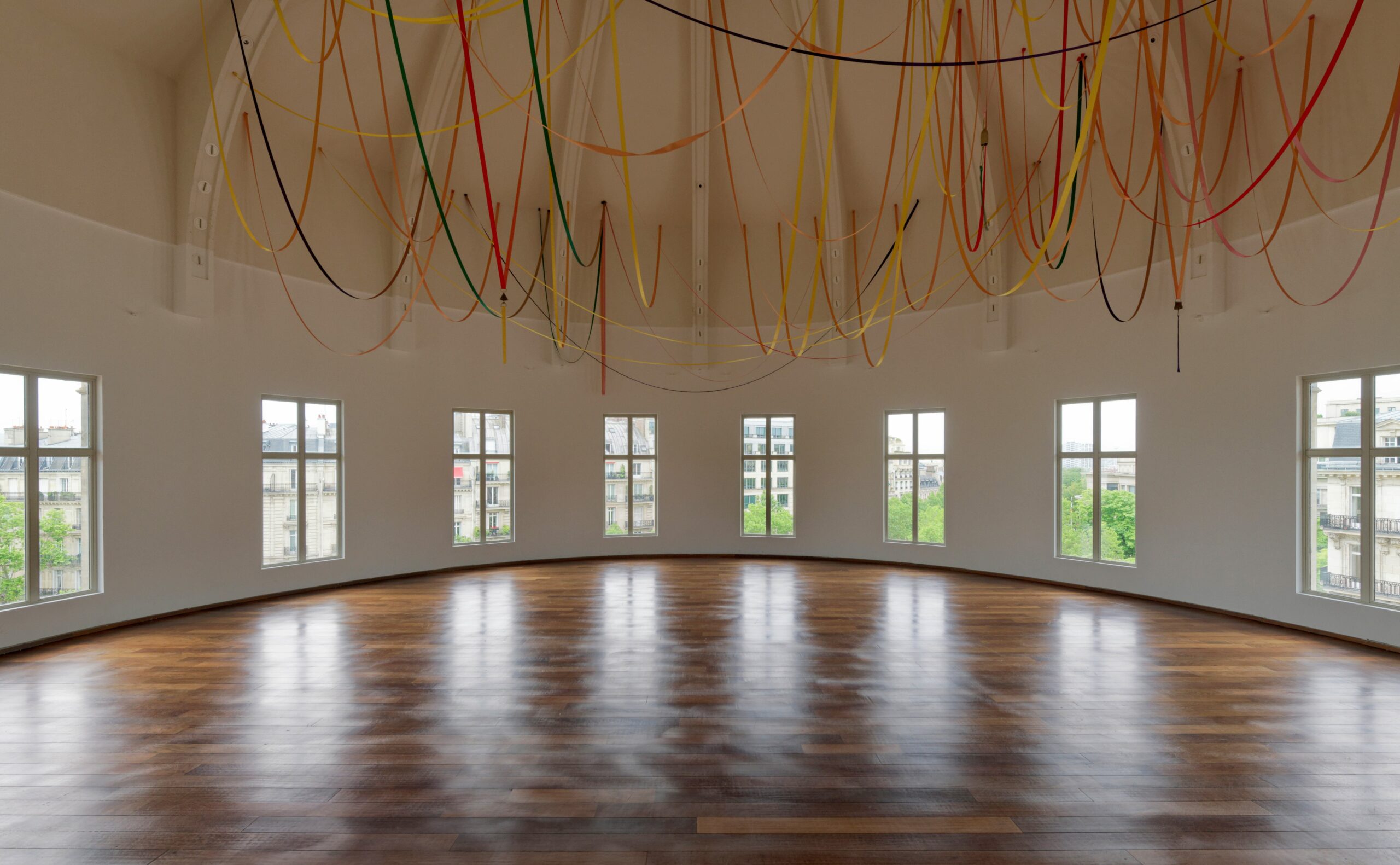
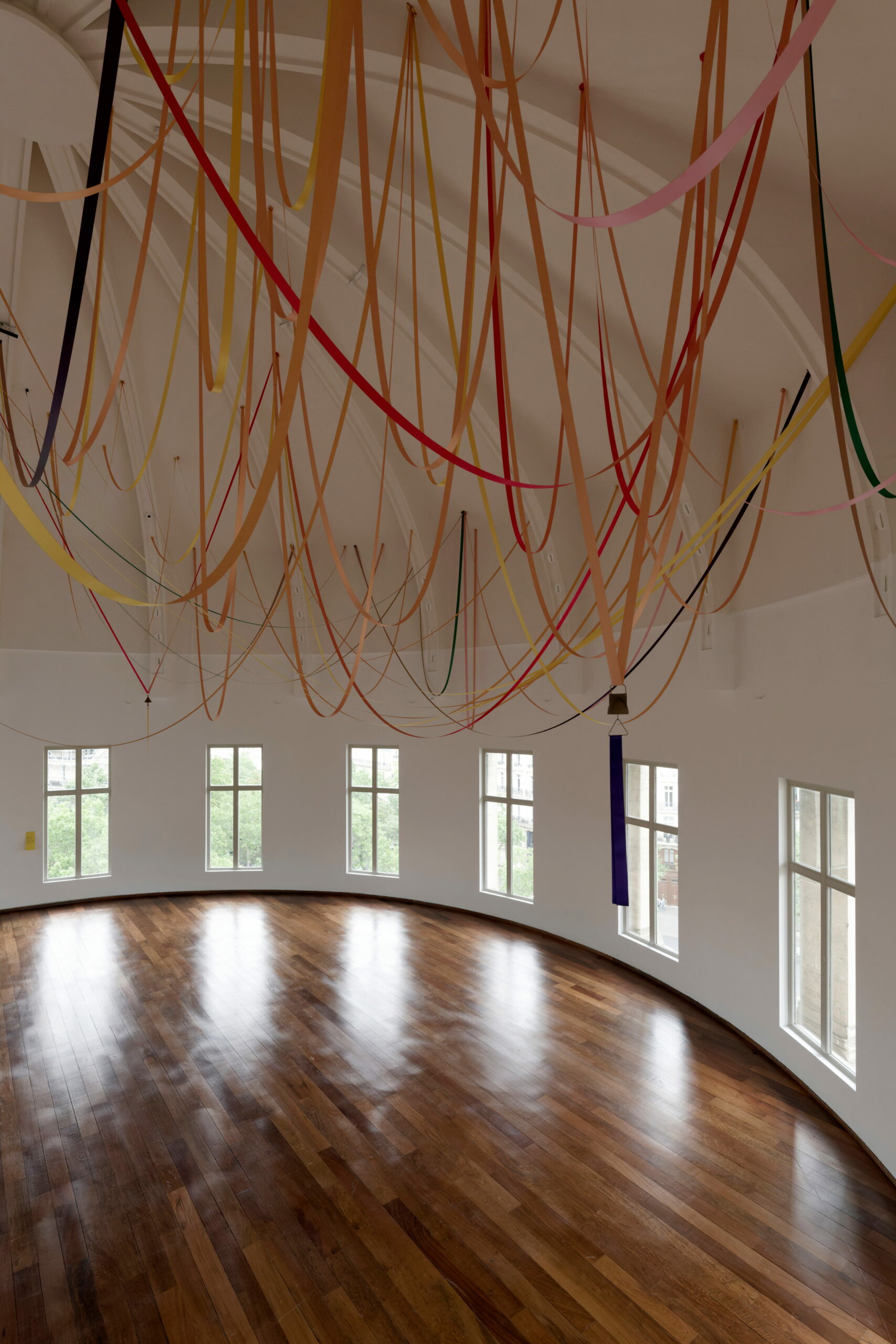
Inside the museum, in the 4th floor rotunda, a mural designed by Seulgi Lee is being applied by a team of Dancheong painters from the Seoul Metropolitan Government’s Department of Intangible Cultural Heritage. Recognized as a national treasure in Korea and inscribed on UNESCO’s Intangible Cultural Heritage Register, Dancheong painting is a system of architectural polychromy applied to wooden surfaces, attested to as early as the Three Kingdoms period and emblematic of the Joseon era.
A network of repeated sequences combining stylized figurative motifs of plants or animals with geometric forms unfolds uniformly and seamlessly. The chromatic range, comprising twelve colors, constitutes a symbolic system in which architecture and cosmogony are closely linked. The cardinal colors obangsaek (blue, red, yellow, black, and white) correspond to the five obanghaeng elements (wood, fire, earth, metal, and water), each associated with a specific direction, season, or virtue.
Press release (PDF)Curator : Cécile Dazord
Exhibition's artists >